blogs
September 28, 2026
Selling Property in Dubai Made Easy: A Complete Guide
Complete step-by-step guide to selling your property in Dubai with ease

Selling property in Dubai isn't complicated, but it does reward preparation. Because the Dubai Land Department (DLD) governs the entire transfer process, every sale, whether it's an apartment, villa, townhouse or commercial unit, follows a fairly predictable path. Sellers who move quickly usually have their documents ready, their mortgage early, and price the property realistically from day one.
This guide walks through that path in order: what to do before you list, what happens once you've got a buyer, and where transactions typically get held up.
Before You List: What Sellers Should Sort Out First
A successful sale isn't just finding a buyer and signing the paperwork. Before you even think about photos or a listing price, it helps to know three things: what the property is actually worth right now, whether your paperwork is in order, and how much a mortgage (if you have one) will cost to settle.
Roughly, the journey looks like this:
- Pricing the property against recent sales
- Getting documents together
- Deciding whether to use an agent or sell privately
- Marketing and viewings
- Negotiating and agreeing terms
- Signing the MOU
- Clearing any outstanding mortgage
- Getting the developer's NOC
- Transferring ownership through a registration trustee
Sort the first few out before you list, and the rest tends to move a lot faster.
Step 1: Price It Properly
Pricing is where most delays actually start, long before a buyer ever walks through the door.
Look at what similar units in your building or community have actually sold for, not what they're listed at. Portal prices are asking prices, not closing prices, and the gap can be significant in a slower market. Factor in the details that genuinely move a valuation: floor level, view, layout, condition, parking allocation, and any upgrades you've made.
If the unit is tenanted, current rental income matters too. Investors often price their offer around the yield, not just the size.
Overpricing doesn't get you a better outcome. It usually gets you a stale listing that sits for months and eventually sells for less than a realistic price would have achieved in week one.
Step 2: Get the Property (and the Listing) Ready
Buyers form an impression within the first few minutes of a viewing, and that impression is hard to undo. A deep clean, fixing anything visibly broken, and clearing out excess furniture go a long way. You don't need a renovation, just a property that photographs and feels well cared for.
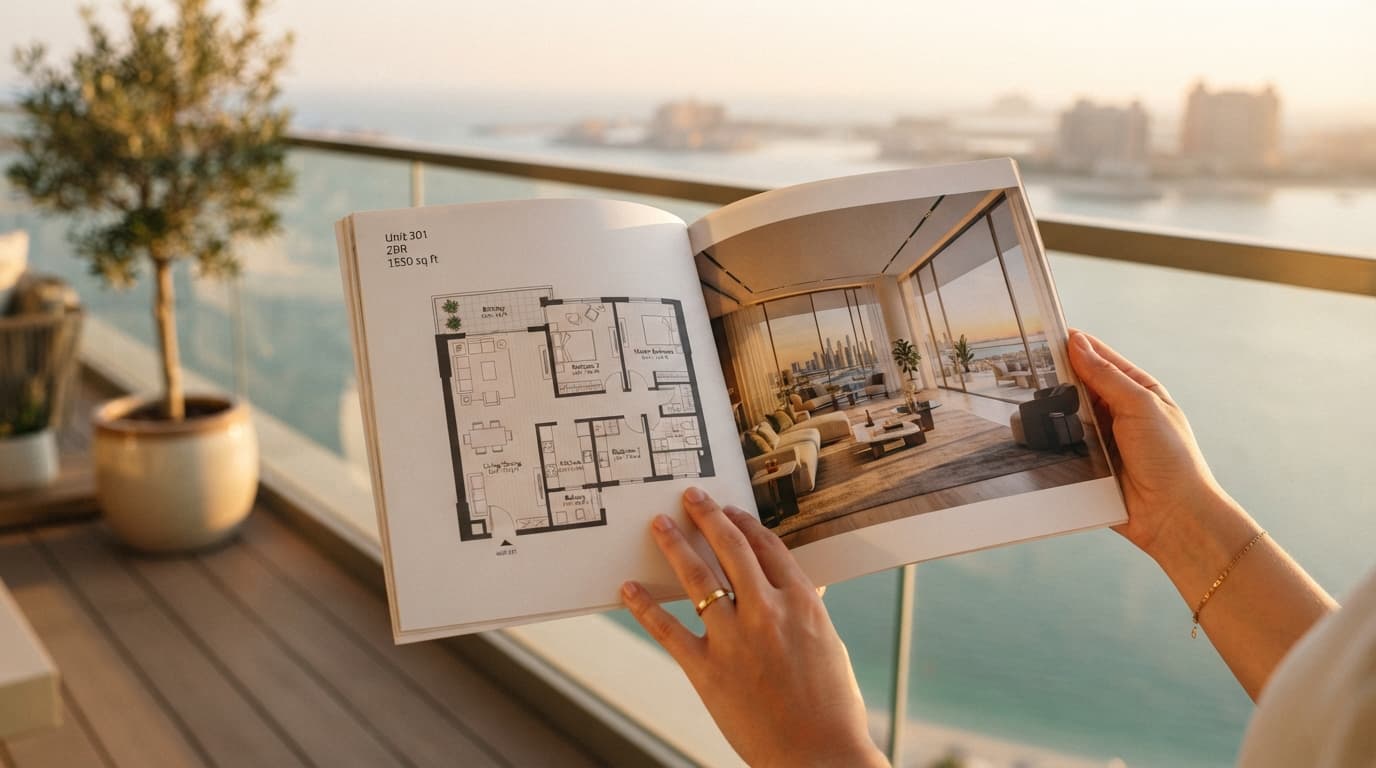
Professional photos and a proper floor plan are worth the cost. They filter out unserious buyers and give those who do book a viewing a realistic idea of the layout beforehand.
Your listing should be upfront about:
- Size and bedroom/bathroom count
- Parking
- Service charges
- Furnishing status
- Whether it's tenanted or vacant
- Building/community amenities
- Handover date, if it's off-plan
Sellers who leave out details like service charges or tenancy status usually end up re-negotiating later, once the buyer finds out anyway.
Step 3: Agent or Private Sale?
Both routes are legitimate in Dubai. An agent handles marketing, buyer enquiries, viewings and much of the paperwork, which is useful if you're based overseas or simply don't have the bandwidth. Selling privately gives you more control, but you own every conversation, viewing and negotiation yourself.
If you go with an agent, confirm they're RERA-registered and get the commission and terms in writing before signing anything. The going rate in Dubai is around 2% of the sale price, plus VAT.
Step 4: Pull Your Documents Together
This step quietly determines how fast your sale closes. Requirements shift slightly depending on your situation, but plan on needing:
- Original title deed
- Emirates ID (residents) or passport (overseas owners)
- Mortgage documents, if applicable
- Proof that service charges are paid
- Power of Attorney, if someone else is acting on your behalf
- Developer paperwork
- SPA, if the unit is off-plan
If there's a mortgage on the property, call your bank now, not once you've accepted an offer. Mortgage settlement has its own timeline, and finding out the details late is one of the most common reasons deals slip past their expected completion date.
Step 5: Market It
With pricing and paperwork sorted, it's time to actually put the property in front of buyers. Good marketing isn't about the volume of photos. It's about giving a buyer enough real information to decide whether to book a viewing.
Highlight what actually matters: the view, proximity to transport or schools, parking, any upgrades. And don't bury the less flattering details. A buyer who discovers an unexpected cost or condition after the MOU is signed is far more likely to renegotiate or walk away entirely.
Step 6: Weighing an Offer
The highest number on the table isn't always the best offer. A cash buyer who can complete in three weeks is often more valuable than a higher bid from someone waiting on mortgage approval that could take two months.
Before accepting anything, review the buyer's funding position, their proposed completion date, and any conditions attached to the offer. Once you're comfortable with the full picture, not just the price, you move to the MOU.
Step 7: Signing the MOU
The Memorandum of Understanding is where the deal becomes real. It typically sets out:
- Agreed price
- Deposit amount
- Completion date
- Payment structure
- Any conditions
- What happens if either side pulls out
Deposits are commonly around 10%, but confirm this rather than assume. Read the MOU properly. Anything non-standard (furniture staying, vacant possession, timing around an outstanding payment) needs to be written explicitly, not agreed verbally on the side.
Step 8: Settling the Mortgage
If there's a loan against the property, your bank will confirm the outstanding balance and what's needed to release it. Start this conversation as early as you can. Banks move on their own schedule, and this step frequently becomes the bottleneck in an otherwise straightforward sale.
Where the buyer is also financing their purchase, you end up with two banks, a developer and a trustee all needing to coordinate, which is exactly why starting early matters.
Step 9: Applying for the NOC
The developer's No Objection Certificate confirms there's nothing outstanding, service charges included, standing in the way of the transfer. Every developer has slightly different fees and turnaround times, so call them directly to confirm requirements rather than assuming.
Applying for the NOC as soon as you have an agreed buyer, rather than waiting until just before transfer, is one of the simplest ways to avoid a last-minute delay.
Step 10: The Transfer
This is the final step: the buyer and seller (or their authorised representatives) attend an approved registration trustee office with the required documents. The trustee verifies everything, the buyer completes payment, and the DLD records the transaction. The buyer then receives the new title deed.
The appointment itself is usually quick, often the shortest part of the process. Nearly all the time is spent on preparation beforehand, which is exactly why getting Steps 1 through 9 right matters so much.
What Does It Actually Cost to Sell?
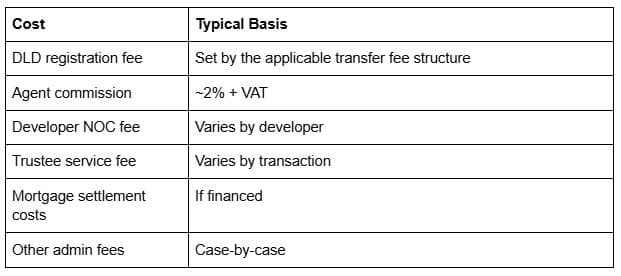
Don't calculate your net proceeds off the sale price alone. Sellers who forget to account for commission, mortgage settlement or NOC fees are often surprised by how much smaller the final transfer amount is. Ask for a full cost breakdown before you agree to a price, not after.
Selling With a Mortgage Still on the Property
A mortgage doesn't stop you from selling. It just adds a coordination step. Your bank confirms the outstanding balance and the process to release it, and in many transactions, the buyer's funds are used directly to clear that balance at completion.
The key is timing: start the settlement conversation with your bank as soon as you're seriously considering a sale, not once you're under pressure to close.
Selling an Off-Plan Property
Off-plan resales work a little differently. Before marketing, review your original SPA and check what the developer actually allows. Some restrict resale until you’ve paid a certain percentage, and most require developer approval for the assignment itself.
Before you list an off-plan unit, confirm:
- How much you've paid the developer so far
- Remaining instalments
- Assignment conditions
- Whether developer approval is required
- Any transfer/admin charges
- Expected handover date
- What similar units are currently trading for
Skipping this check is how sellers end up negotiating with a buyer only to discover the developer won't approve the transfer as agreed.
Selling From Outside the UAE
You don't need to be in Dubai to sell a Dubai property. Overseas owners commonly appoint a representative through a Power of Attorney, who then handles the process on their behalf, subject to the requirements of the developer, the trustee and the DLD.
Make sure the PoA explicitly covers the sale and related procedures. A generic or outdated PoA can itself become a delay. It's also worth planning ahead for how proceeds will move internationally, since currency conversion, transfer fees and bank processing times all affect what actually lands in your account.

How Long Does Selling Actually Take?
There's no fixed timeline. It depends on price, location, property type and how much buyer demand exists for that segment. Once you have a buyer, though, a cash transaction can move quickly, while a financed purchase adds time for the buyer's bank to complete its own approvals.
The single biggest lever you control is preparation: documents ready, service charges cleared, mortgage and NOC processes started early.
What Actually Causes Delays
A few issues come up again and again in Dubai transactions:
- Unpaid service charges. These usually need to be cleared before an NOC will be issued.
- Slow mortgage settlement. Bank timelines rarely match seller expectations.
- Missing or expired documents. A small paperwork gap can stall a transfer completely.
- Ownership complications. Inheritance issues or PoA problems often need extra verification.
- Mismatched property records. Discrepancies between documents and the actual unit.
- Buyer financing. Mortgage approval delays are one of the most common gaps between MOU and transfer.
Most of these are avoidable simply by checking for them before you list, not after an offer comes in.
Before You Accept an Offer
Price is only one part of the decision. Also weigh:
- The buyer's proposed completion date
- Whether they need a mortgage
- Whether the property needs to be vacant
- Whether service charges are fully settled
- Any outstanding developer or bank obligations
- Your actual net proceeds once costs are factored in
A slightly higher offer with a messier set of conditions isn't automatically the better deal. Read the full terms, not just the number, before signing the MOU.
A Few Practical Tips
Price it right from the start rather than chasing the market down after months of no interest. Get your paperwork ready before you list, not after a buyer appears. Keep the property presentable for viewings, and be upfront about condition, tenancy and service charges. Buyers find out eventually, and it's better they hear it from you. If you're using an agent, put the commission and responsibilities in writing. And above all, know your real net proceeds before you agree to anything.

Frequently Asked Questions
Can I sell my property in Dubai without an agent?
Yes. You can sell privately, though you'll still need to follow DLD procedures and complete the required documentation yourself.
How long does it take to sell a property in Dubai?
It varies. Finding a buyer can take days or months depending on price and demand. Once you have a buyer, mortgage and NOC requirements affect how quickly you reach completion.
What documents do I need to sell property in Dubai?
Typically, the title deed, Emirates ID or passport, mortgage details (if applicable), proof of cleared service charges, and a Power of Attorney if someone is acting on your behalf.
Do I need an NOC to sell my Dubai property?
For most completed properties, yes. The developer's NOC is required before transfer, and fees and processing time vary by developer.
Can I sell a property that still has a mortgage on it?
Yes. The outstanding balance is settled as part of the sale, usually with your bank's involvement early in the process.
Can an overseas owner sell property in Dubai?
Yes, through an authorised representative appointed via Power of Attorney.
What's the typical agent fee for selling in Dubai?
Around 2% of the sale price, plus VAT. Confirm the exact figure in your agency agreement.
Is there capital gains tax on selling property in Dubai?
This depends on your personal tax residency status, and individual sellers should also check obligations in their home country.
Can I sell an off-plan property before handover?
Often yes, but it depends on the developer's rules and your SPA. Approval and minimum payment thresholds may apply.
What actually happens on transfer day?
The buyer and seller (or their representatives) attend a registration trustee’s office with the required documents. The trustee verifies everything, pays the fees, and the DLD updates the ownership record.