blogs
August 07, 2026
How Population Growth Is Shaping Dubai’s Property Market in 2026
Population growth is driving demand for homes and essential facilities in Dubai.
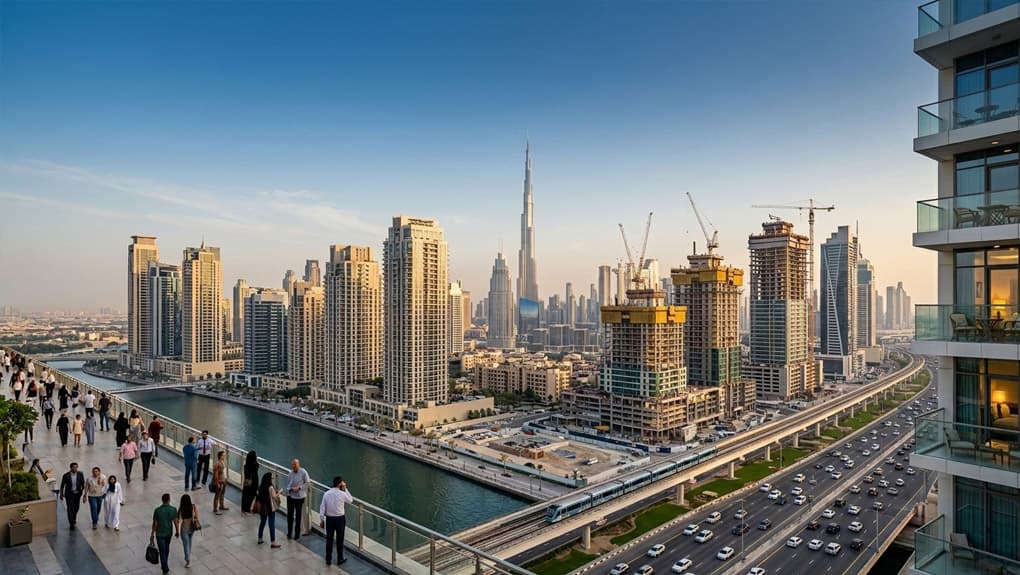
Population growth has turned out to be one of the key drivers in the property demand of Dubai. The growing population will definitely raise demands for houses, apartments, offices, schools, shopping malls and other facilities.
Moreover, population growth is expected to remain an important factor for Dubai's property market in 2026, supported by the continued attraction of professionals, business owners, investors, entrepreneurs, and high-net-worth individuals to the emirate because of its economic opportunities and lifestyle advantages.
Official figures from the Dubai Data and Statistics Establishment show that Dubai's population reached approximately 4.58 million by the end of 2025, reflecting continued strong population growth in the emirate. The population increased from around 3.72 million in 2022 to approximately 4.25 million in 2024, before rising further in 2025.
This population growth is an important driver of housing demand. As more people move to Dubai, demand for residential properties can increase across both the rental and sales markets. New residents have different housing needs based on their income, household size and lifestyle, creating demand for studios, apartments, townhouses and villas across different communities and price ranges.
Thus, population growth turns out to be an important aspect while considering the Dubai property market in 2026.
Dubai Property Market Enters 2026 with Strong Momentum
Dubai entered 2026 after another strong year for real estate. Property activity remained high throughout 2025, supported by population growth, international investment, business expansion, and strong demand from both residents and overseas buyers.
Dubai's real estate market recorded more than 270,000 transactions worth AED 917 billion in 2025, marking one of the strongest years on record for the emirate's property sector. However, figures can vary across market reports depending on the transaction types, property categories and datasets included.
The strong results show that demand did not come only from property investors. More residents are also entering the market as buyers and tenants.
This is an important change in Dubai's property cycle. Population growth creates real housing demand, while investors add another layer of demand.
As more people move to Dubai, the need for suitable housing continues to rise. This supports demand across different price ranges rather than only at the luxury end.
More Residents Are Driving Greater Housing Demand
Population increase has an impact on the demand for housing.
When thousands of new residents arrive, they require places to live that would be close to their place of work, schools, transport facilities, shopping centers, etc. Some may prefer renting when they arrive, whereas some may prefer home ownership after a while.
It leads to an increase in demand in various sectors of the real estate industry.
According to figures from the Dubai Data and Statistics Establishment, Dubai's population increased from around 3.97 million at the end of 2023 to approximately 4.25 million at the end of 2024. The population continued to grow during 2025, reaching approximately 4.58 million by the end of the year.
This population growth is important for property investors because rental demand can increase as the number of residents rises. New residents also have different housing needs. Young professionals may prefer studios and one-bedroom apartments, while families may look for larger apartments, townhouses or villas.
Rising Housing Supply Could Bring More Market Balance
Population growth is only one side of the property market.
The other side is housing supply.
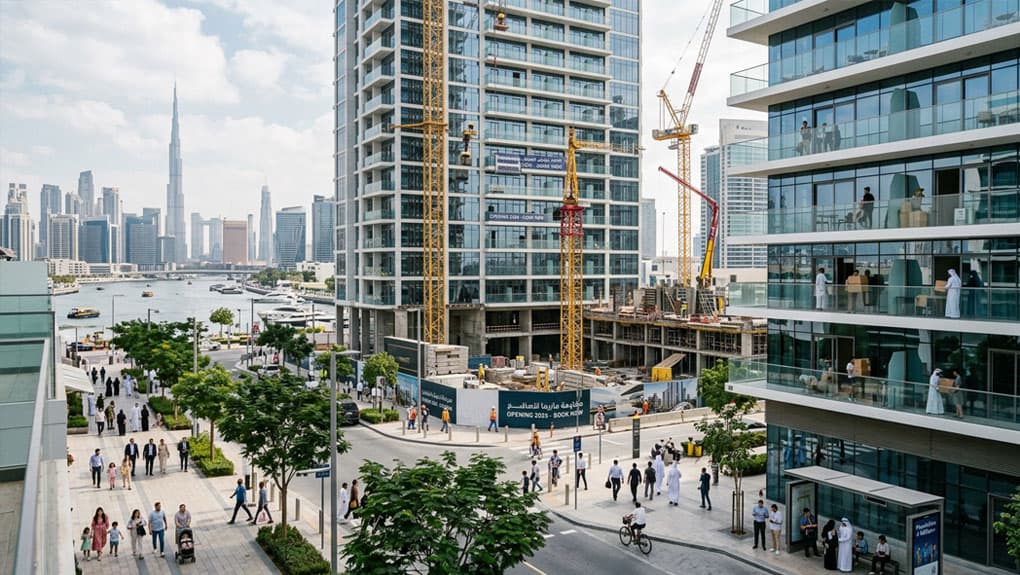
There are many residential development projects lined up in Dubai, with a substantial number of apartments, villas, and townhouses expected to enter the market in the coming years. According to one 2026 market outlook, Dubai's residential supply pipeline could include more than 130,000 units. However, the actual number delivered may be lower, as forecasts can change due to construction timelines, project phasing, and potential delays.
The addition of these residential units would likely result in more choices available for both tenants and buyers.
It would mean that there is increased competition among landlords who have similar types of residential units being built in the same location at one point in time.
For buyers, however, more supply can create greater choice.
The effect will also differ between communities. Areas with strong population growth and limited new supply may continue to see higher rental demand. Communities receiving a large number of new homes may experience more competition.
This balance between population growth and new supply will be one of the key factors shaping the Dubai property market in 2026.
Why Villas and Townhouses Remain Popular with Buyers
Population growth is not affecting every property type in the same way.
Demand for villas and townhouses remains strong as many families look for larger homes with more privacy and outdoor space.
The shift towards larger homes became more visible after the pandemic. Many residents began placing greater value on space, private gardens, community facilities, and family-friendly surroundings.
Established villa communities have an added advantage because land availability can limit the amount of new housing that can be added.
This can support demand for existing villas and townhouses when more families move into Dubai.
Recent 2026 market forecasts also point to stronger expected price growth for villas and townhouses compared with apartments. One outlook projected villa and townhouse prices to rise by around 17.7%, compared with 7.4% for apartments, although actual results will vary by location and property type.
This does not mean every villa will outperform every apartment. Location, price, condition, community facilities, and tenant demand still matter.
Establishing and activating a network of sales channels into revenue generating, mutually beneficial partnerships.
International Buyers Continue to Strengthen Property Demand
Population growth is not driven only by people moving for jobs.
Dubai still keeps on attracting foreign investors, entrepreneurs, business owners, and wealthy individuals. Most of these people join the market as investors in real estate, first before becoming residents of Dubai.
These factors help contribute towards the continuous flow.
The increasing numbers of foreigners are also causing demand for rentals as some decide to rent their home for a few years as they deliberate on whether to invest in properties in Dubai.
The rental sector becomes one of the segments of the real estate sector in Dubai.
The international buyers also contribute towards the demand for luxury housing. Areas like Downtown Dubai, Palm Jumeirah, Dubai Marina, Emirates Hills, and Dubai Hills Estate keep on attracting investors in real estate in prime locations.
Population growth therefore supports both the mass-market and premium property segments.
Existing Project Sales Offer Support to the Property Market
Another factor supporting Dubai's property market is the large number of properties already sold but still under development.
Many buyers purchase off-plan homes several years before completion. Developers then deliver these properties in stages as construction progresses.
This creates a pipeline of future housing supply while also providing developers with revenue from earlier sales.
Strong sales backlogs can give major developers greater visibility over future income. It also means that new projects entering the market are not the only source of demand.
Many properties already have buyers before they are completed.
However, the growing supply pipeline still needs to be monitored. If deliveries rise faster than population growth in a particular area, landlords and sellers may face greater competition.
The market is therefore likely to become more selective in 2026.
Better Market Conditions Are Supporting Property Financing
The current Dubai property market also differs from some earlier cycles because the financial system has become more regulated.
Banks have maintained lending controls, while developers have increasingly used different funding sources to finance projects.
This creates a more structured environment for the property sector.
Financing conditions also affect buyers. When mortgage costs are manageable, more residents can consider moving from renting to buying.
This can reduce pressure on the rental market in some segments while supporting demand for homes for sale.
At the same time, cash buyers remain an important part of Dubai's property market.
International investors, high-net-worth individuals, and experienced property buyers can often purchase without relying heavily on mortgage finance.
This mix of cash and mortgage buyers gives the market greater depth.
What Population Growth Means for Dubai's Property Future
Population growth is likely to remain one of the most important factors shaping Dubai's property market over the next several years.
The city continues to attract people because of employment opportunities, business growth, infrastructure, tourism, lifestyle, and international connectivity.
The official population figures show how quickly Dubai has expanded. The population stood at around 3.72 million at the end of 2022 and reached approximately 4.25 million by the end of 2024. It continued to grow during 2025, reaching approximately 4.58 million by the end of the year.
This continued population growth is likely to increase the need for housing across Dubai. As more residents move to the emirate, demand can grow for both rental and owned homes, including apartments, townhouses and villas.
The key question for 2026 is not simply whether Dubai needs new homes. It is whether new housing supply will match the locations, property types and price ranges that new residents need.
That distinction matters.
The existence of many new apartments cannot guarantee that there is sufficient demand for family villas. The construction of new houses may be of no use to middle-class tenants. Also, houses located in an area with poor connectivity cannot attract people working in business districts.
That is why it is necessary for investors to consider more than just numbers when considering population.
Growing Population Creates More Demand for Rental Homes
The sector most affected by increased population is the rental market.
Most new tenants are likely to rent first before buying their own properties.
High rental demand will help maintain rental prices and occupancy rates in communities located near business centers, transportation routes, schools, and main roads.
However, rental performance varies between areas.
Communities with large amounts of new supply may see greater competition between landlords. Established areas with limited new homes may have stronger pricing power.
This creates opportunities for investors who choose properties based on actual tenant demand rather than relying only on city-wide rental figures.
For investors, the key factors include:
- Population growth in the area
- Number of new units being delivered
- Average rental prices
- Property purchase price
- Tenant profile
- Access to transport
- Nearby schools and services
- Community facilities
- Expected rental yield
A property with strong demand and limited competing supply can provide better rental performance than a cheaper property in an area with too many similar units.
Dubai Communities Set to Benefit from Rising Population
Increased population can help boost demand within various existing and developing communities.
Communities like Jumeirah Village Circle, Dubai Hills Estate, Business Bay, Dubai Marina, Jumeirah Lake Towers, Al Furjan, and Dubai South have various types of people moving into them.
People who need affordable housing along with good access to commercial facilities and transport move to Jumeirah Village Circle.
Families and wealthy people seeking bigger houses move to Dubai Hills Estate.
Business Bay and Dubai Marina have much to offer to professionals due to their proximity to work locations.
Al Furjan gets benefited by its family-friendly atmosphere and transport connections.
Dubai South has longer-term potential as development continues around major infrastructure and employment zones.
Investors should still assess each property individually. A strong community does not mean every building or unit will produce the same return.
What Dubai's Population Growth Means for Investors
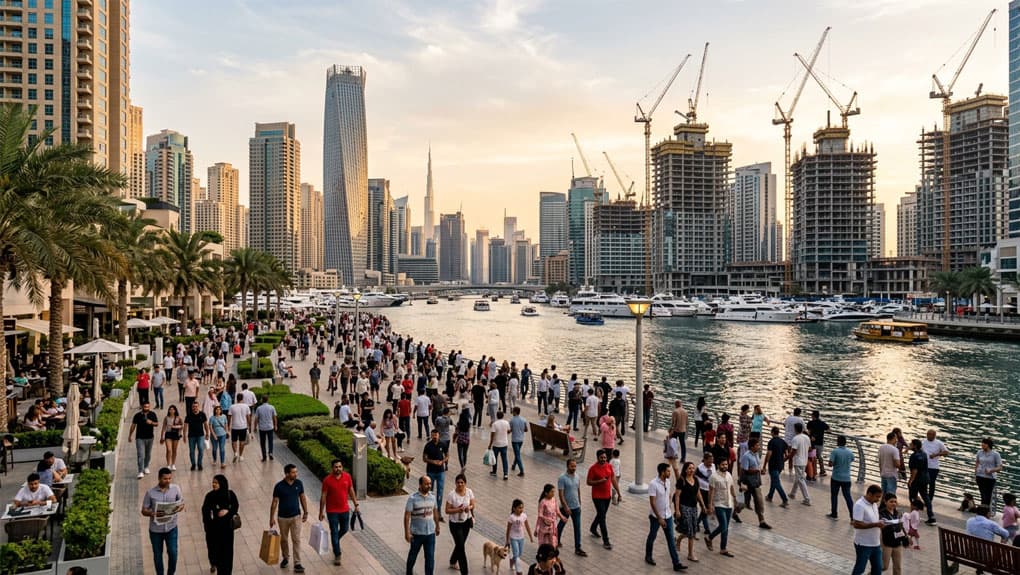
Population growth is one of the important factors that provide a solid basis for housing demand in the long term.
Nevertheless, population growth alone cannot be the main motivation behind purchasing a property.
It is also advisable to consider other factors, such as the price of the purchase, the yield on rent, service costs, supply forecast, developer reputation, and potential capital appreciation.
For instance, a property located in a rapidly growing area can be an excellent choice because of increasing rentals. Yet, thousands of other properties under construction can become fierce competitors.
At the same time, a property in an established area, which does not have many upcoming developments, might be a better choice for long-term rental returns.
Therefore, the best decisions are made based on the analysis of several factors.
Why Housing Demand Could Stay Strong Over the Coming Years
Dubai's population growth is changing the shape of the city's property market.
The emirate is not only attracting investors. It is attracting people who want to live, work, build businesses, raise families, and stay for longer periods.
That creates a deeper form of property demand.
The growth of the resident population also supports other parts of the economy. More residents mean greater demand for schools, retail, healthcare, offices, transport, restaurants, and leisure facilities.
These services then make communities more attractive to future residents.
This creates a cycle where population growth supports property demand, while better infrastructure and services help attract more people.
The market may become more balanced in 2026 as new homes enter the market and price growth slows in some segments. Current forecasts point towards moderation rather than a broad market decline.
For investors, this means property selection will become increasingly important.
Instead of buying simply because prices are rising, investors should focus on locations with strong demand, good infrastructure, limited competing supply, and sustainable rental income.
Why Range International Property Investment?
In Range International Property Investment, we recognize that Dubai's property market cannot be measured in one figure.
Population growth, rent demand, new supply, property values, infrastructure, and future developments all affect the performance of investments.
We guide the investor in comparing neighborhoods to find the property that suits his/her investment objective.
Whether you are looking for a property with a high rental yield, a family villa, an off-plan property, or a long-term investment, the main criteria we consider when recommending a property through Range International Property Investment are location, demand, pricing, and future potential.
The population growth of Dubai presents new opportunities; however, selecting the appropriate property will be key.
An investor who understands the movement of people, their housing needs, and the new supply in 2026 will make better-informed decisions.
Frequently Asked Questions
What causes population growth in Dubai in 2026?
Dubai's population growth is being supported by employment opportunities, business expansion, international investment, lifestyle appeal and residency programmes. The city continues to attract professionals, entrepreneurs, families and high-net-worth individuals from different parts of the world.
Official data shows that Dubai's population reached approximately 4.58 million by the end of 2025, highlighting the continued growth of the emirate's resident population. This growth is an important factor supporting demand for housing across different property types and communities.
How does the population growth affect the real estate market of Dubai?
Employment opportunities, business development, investments, lifestyle aspects, and residential programs are some of the aspects which facilitate the population growth in Dubai. It is still possible for Dubai to attract professionals, entrepreneurs, families, and wealthy individuals from around the world.
What could happen to Dubai property prices in 2026?
There are no projections predicting a market crash for Dubai real estate in the near future. Rather, multiple projections see a slowdown of price rises due to an increase in supply on the market.
The effect will vary between communities and property types. Prime homes, villas, apartments, and off-plan properties may follow different price trends.
Which types of properties are most popular among Dubai residents?
Despite the high demand for various categories of real estate, villas and townhouses still gain popularity among families looking for larger homes and more privacy.
Apartments remain important because they serve a much wider tenant base, including young professionals, couples, and smaller households.
Will Dubai property demand remain strong in 2026?
The demand for properties in Dubai is likely to be sustained on the basis of rising population, economic activity, foreign investment, and immigration.
However, the market is entering a more mature phase. New supply is likely to give buyers and tenants more choices, which could make location and property quality more important.
What is the current population of Dubai?
Dubai's population growth is being supported by factors such as employment opportunities, business expansion, international investment, lifestyle appeal and residency programmes. The city continues to attract professionals, entrepreneurs, families and high-net-worth individuals from around the world.
Dubai's population reached approximately 4.58 million by the end of 2025, according to the latest population data from Dubai's authorities. Population growth has remained strong in recent years, with the population increasing from around 3.72 million in 2022 to approximately 4.25 million by the end of 2024, before rising further in 2025.
This continued population growth highlights the expanding number of residents in the emirate and supports ongoing demand for housing across different property types and price ranges.
How will population growth affect Dubai rental demand?
Yes. New people will normally have to rent houses before deciding to purchase one.
Such areas that provide easy access to places of work, transportation facilities, schools, and community amenities will continue being popular with people looking to live there.
Is Dubai property still a good investment in 2026?
Dubai still has a very appealing real estate market but investors need to be selective.
Population growth offers a good foundation of demand but other factors such as real estate prices, rental income, service fees, new supplies, and developer among others must be considered before purchasing.
Which Dubai communities could gain from population growth?
Various communities could benefit from continued population growth, including Jumeirah Village Circle, Dubai Hills Estate, Business Bay, Dubai Marina, Jumeirah Lake Towers, Al Furjan, and Dubai South.
Each community appeals to different kinds of people, and it is important for the investor to ensure the property suits the prospective renter or buyer.
What should investors check before buying property in 2026?
Investors are required to assess the population trend, rent demand, price of purchase, rent yield expectation, maintenance costs, future supply, transportation, and reputation of the developer.
An investment opportunity does not always mean purchasing the most affordable property or that offering the highest rental yield.