blogs
October 28, 2026
Common Property Management Mistakes That Cost Dubai Landlords Money
How poor property management affects Dubai landlords' profits

A rented-out flat in Dubai looks simple on paper. Rent comes in, service charges go out, and whatever is left is yours. In real life, the gap between a property that earns well and one that quietly drains your account usually comes down to how it’s managed.
Most of the money landlords lose doesn’t disappear in one dramatic event. It leaks out slowly: a tenant who was approved in a hurry, an AC fault that sat for three weeks, a rent figure picked on a hunch. These property management mistakes are common among Dubai landlords, and almost all of them can be fixed.
Here are the seven we see most often, and what to do about each.
1. Signing the First Tenant Who Says Yes
An empty unit feels expensive, and it is. One vacant week costs you roughly 2% of a year’s rent. So when a decent-looking applicant turns up on day two, it’s tempting to grab them.
The trouble is that a bad tenancy costs far more than a slow fortnight. Late cheques, ignored rules and a flat that comes back in worse shape than you handed it over can wipe out months of income.
What to do instead
You don’t need a ten-step interrogation. A few simple checks go a long way:
- Ask for a copy of the applicant’s Emirates ID or passport and valid UAE visa.
- Get proof of income, such as a salary certificate or employer letter, and check that the rent fits comfortably within it.
- Ask why they’re moving and how long they plan to stay. Tenants who intend to stay for years are worth a lot.
- Take up references from a previous landlord if the applicant can provide one.
Then walk them through the terms before anything is signed: payment dates, who reports faults and how, and what happens at renewal. A tenant who understands the rules on day one is far less likely to argue about them in month nine.
2. Putting Off Repairs and Routine Maintenance
Small problems get expensive when they’re ignored. A dripping tap becomes a damp cupboard. A hidden leak lifts the flooring. An AC unit that’s been struggling since spring gives up in July, when every technician in the city is booked solid.
Dubai’s heat makes this worse. Air conditioning, plumbing, water heaters and window seals take a real beating here, and tenants notice the moment any of them fail. Leave requests unanswered and you’ll lose goodwill fast, which often means losing the tenant at renewal.

What to do instead
Build a basic maintenance routine and stick to it:
- Have the AC serviced before summer, not during it.
- Check plumbing, water heaters, door locks and silicone seals at least once a year, ideally between tenancies.
- Keep a folder of invoices, warranties and service dates so you can spot a unit that keeps breaking down.
- When a tenant reports a fault, reply the same day, even if it’s only to say a technician is booked for Thursday.
Also spell out repair responsibilities in the tenancy contract. As a general rule, landlords handle major maintenance and structural problems while tenants deal with minor day-to-day upkeep, but confirm the current rules and put the details in writing so nobody is guessing.
3. Getting the Rent Wrong
The price is too high and the flat sits empty while you keep paying service charges and the mortgage. The price is too low and you hand away money every month for the full length of the lease.
The most common cause is relying on a gut feeling, or on what a neighbour said they were getting.
What to do instead
Start with comparable units: same community, ideally the same building, with a similar size, view, parking and furnishing level. Property portals like Bayut, Property Finder and Dubizzle are a handy starting point, but remember that they show asking prices, not what landlords actually agreed with tenants. A local agent who closes deals in your building will know the real numbers.
If you’re thinking about raising the rent on an existing tenancy, check the Dubai Land Department’s rental index and rent calculator first. Increases are governed by rules on how much you can raise the rent and how much notice you must give, and getting it wrong can leave you with an increase you can’t enforce.
Review your pricing before every renewal or new listing. The market moves, and last year’s figure may not hold up.
4. Using a Vague Tenancy Agreement or Skipping Ejari
Most landlord–tenant disputes come back to something that wasn’t written down properly. Who pays for a broken water heater? When exactly is the rent due? What happens if the tenant wants to leave early? If the contract doesn’t say, you’re relying on memory and goodwill.
Then there’s Ejari, Dubai’s tenancy contract registration system. Without a registered contract, you’re on shaky ground if a dispute reaches the Rental Dispute Settlement Centre, and your tenant will need the registration for things like DEWA connection and visa processing. Either party can handle it, but as the landlord you should make sure it’s actually done and keep a copy of the certificate.
What to do instead
A solid tenancy agreement should clearly cover:
- The rent amount, number of cheques and due dates
- The tenancy period and renewal process
- The security deposit and the conditions for returning it
- Who is responsible for which repairs
- Notice requirements and the process for ending the tenancy
Read it with the tenant before signing, and keep copies of everything: the signed contract, Ejari certificate, cheque records, inspection reports and any important messages. If a clause or situation is unclear, ask the relevant Dubai authority or a qualified property professional before you act.
5. Trying to Handle Everything Yourself
Collecting rent is the easy bit. The real workload is viewings, chasing cheques, arranging technicians, answering messages at inconvenient hours, tracking renewals and keeping paperwork straight. If you work full time, live overseas or own several units, things start slipping.
Doing it yourself is perfectly reasonable if you live nearby and have the time. The mistake is having no system at all and hoping for the best.

What to do instead
Be honest about which tasks you’re good at and which you keep postponing. If the answer is most of them, a property management company in Dubai may be worth the fee. Full management is often quoted at around 5% of annual rent, though it varies, so get a few quotes.
Before you sign with anyone, ask:
- What exactly does the fee cover?
- How are urgent repairs handled out of hours?
- Is there a spending limit before they need your approval?
- How often will you receive reports and statements?
- Are there extra charges for tenant placement, renewals or inspections?
Then compare the cost with the hours you spend now and the money you’ve lost to delays. Sometimes it pays for itself. Sometimes it doesn’t. Just make that call on purpose.
6. Poor Communication With Tenants
Picture a tenant whose AC dies in August. They message you on Monday. Nothing. Tuesday, nothing. By Wednesday they’re annoyed, sleeping badly, and quietly deciding not to renew.
Meanwhile you had no idea it was urgent, because nobody told you how to flag urgent problems.
Good communication isn’t only about handling complaints. It keeps everyone clear on payment dates, inspection visits and renewal plans, and it means you hear about small problems early, while they’re still cheap.
What to do instead
Give tenants one clear way to reach you or your property manager, and tell them what counts as urgent and how quickly to expect a reply. Be polite and consistent. If a repair can’t happen straight away, say what the next step is and follow up.
Put important decisions in writing, even if it’s just a WhatsApp message or email confirming what was agreed on a call. Being responsive doesn’t mean saying yes to everything. It means answering fairly and sticking to the contract, which tenants tend to respect.
7. Ignoring the Full Cost of Ownership
Plenty of landlords judge their investment by rent minus mortgage. That leaves out a long list of costs: service charges, maintenance, insurance, management fees, advertising, leasing and admin costs, vacancy between tenants and the occasional upgrade or replacement appliance.
It also helps to separate two figures that often get mixed up. Gross rental yield is annual rent divided by the purchase price. Net rental income is what’s left after you subtract the running costs. Only the second one tells you how the property is really doing.
Here’s an illustrative example. Say a flat brings in AED 100,000 a year in rent:
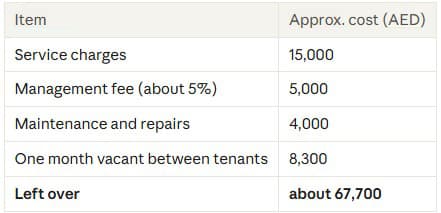
Here’s an illustrative example. Say a flat brings in AED 100,000 a year in rent: That’s a third less than the number on the lease, and this is a fairly smooth year with no major repairs.
What to do instead
Build an annual budget that includes regular costs plus a cushion for surprises. If you own more than one property, track income and expenses separately for each so you can see which ones are earning their keep. Review the numbers at least once a year, and when you’re calculating returns, always use net income, not just rent.
A Few More Things Dubai Landlords Should Keep in Mind
Keep your paperwork in one place. Tenancy contracts, Ejari certificates, rent receipts, maintenance invoices and inspection reports should be easy to find. You’ll be glad of it when a question comes up.
Plan the end of each tenancy early. Dubai has set notice periods for things like non-renewal or rent changes, commonly 90 days, so don’t wait until the last month to decide what you want. Use any gap between tenants for repairs and a deep clean.
Review performance regularly. Look at income, expenses, vacancy and repair costs every few months. A unit that did well three years ago might need a different approach now.
Check the rules before you act. Tenancy registration, rent increases, notices and dispute procedures all have specific requirements, and they can change. Confirm the current position with the Dubai Land Department or the Real Estate Regulatory Agency (RERA) before you make a move.
Frequently Asked Questions
What are the most common property management mistakes for Dubai landlords?
The usual suspects are choosing a tenant in a rush, putting off repairs, pricing the rent badly, using a vague contract or skipping Ejari, communicating poorly and ignoring the full cost of ownership. Each one either cuts your income or adds to your workload.
Why does tenant screening matter?
It helps you find out whether someone can actually afford the rent and is likely to look after the flat. Checking documents and references takes a day or two and can save you months of problems.
What is Ejari, and do landlords have to register?
Ejari is Dubai’s system for registering tenancy contracts. Registration is a requirement for tenancies in Dubai, and tenants need it for services like DEWA. Check the current process with the Dubai Land Department or an authorised service provider.
How often should a rental property be serviced?
There’s no universal schedule. In Dubai, service the AC at least once a year before summer, check plumbing and seals annually, and fix reported faults promptly. Inspecting the flat between tenancies is a good habit.
How do I set the right rent in Dubai?
Compare similar units in the same community, looking at size, condition, facilities and parking. Check the Dubai Land Department’s rental index before changing rent on an existing tenancy.
Is a property management company worth it?
It depends on your time, location and how many properties you own. If you live abroad or keep missing tasks, the fee can easily be worth it. If you’re local and organised, you may be fine alone. Compare quotes and read what’s included.
Who pays for repairs in a Dubai rental?
It depends on the tenancy agreement and the law. Generally, major repairs fall to the landlord and minor upkeep to the tenant, but get this written into the contract. If there’s a dispute, check the current guidance or speak to a qualified professional.
How can I reduce vacancy between tenants?
Price realistically, present the flat well, reply to inquiries quickly and start planning renewals or new listings well before the lease ends. A property in good condition simply lets faster.